Chemical Jacketed Reactors About
Product details
| Brand | Mechno Tech |
| Usage/Application | Industrial |
| Material | MS |
| Power | 6 Kw |
| Frequency | 50 Hz |
| Voltage | 220 V |
| Phase | Single Phase |
| Capacity | 3 KL |
| Country of Origin | Made in India |
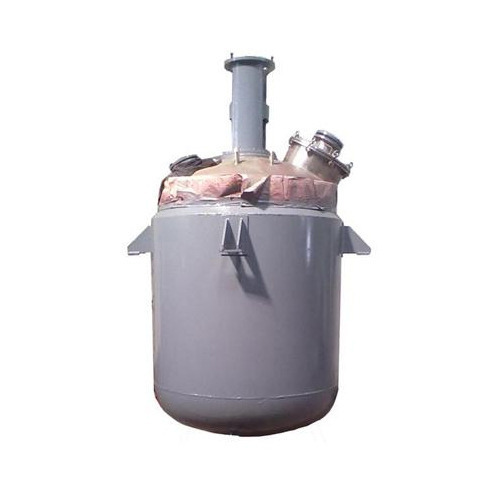
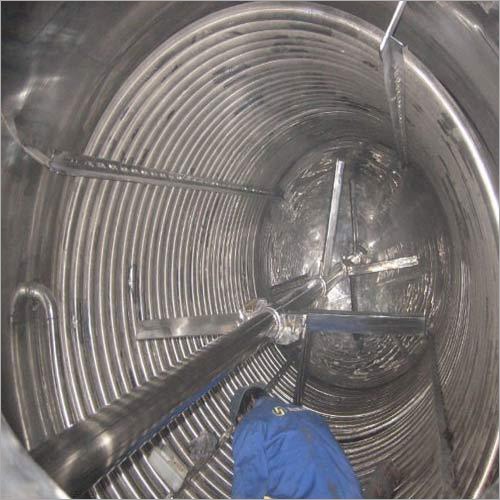
Precision Mixing and Reaction ControlDesigned to meet the demanding requirements of chemical and pharmaceutical industries, these jacketed reactors offer robust construction, corrosion-resistant materials, and advanced temperature management. Whether used for batch mixing, reactions, or product formulation, the reactors variable agitator speeds and customizable internal configurations ensure optimal process efficiency and product quality.
Flexible Design for Diverse ApplicationsFrom a choice of internal finishesmirror or mattto various external coatings, these reactors can be tailored for specific process needs. Multiple inlet/outlet options, integrated thermowells for precise temperature measurement, and optional control panels lend versatility, making them suitable for a wide array of chemical production and laboratory settings.
FAQs of Chemical Jacketed Reactors:
Q: How does the jacketed reactor maintain precise temperature control during chemical processes?
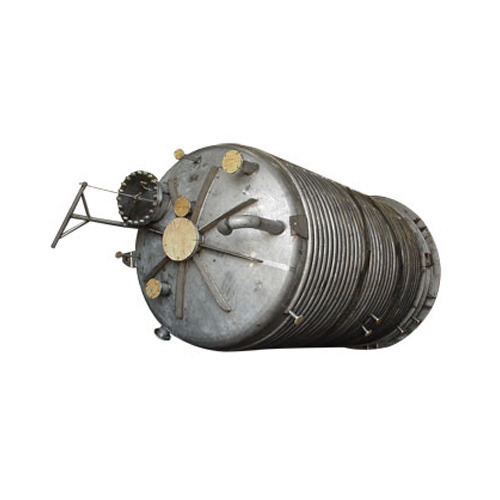
A: The reactor features a double-walled jacket, which allows steam, hot oil, or electric heating to circulate around the vessel. This setup, along with integrated thermowells and insulation options like rockwool or glasswool, ensures accurate temperature regulation up to 250C.
Q: What materials and capacities are available for these jacketed reactors?
A: These reactors are constructed from high-grade stainless steel (SS304/316), mild steel, or specified alloys, with capacities ranging from 50 to 20,000 liters. Material selection is based on process requirements and chemical compatibility.
Q: When should I choose a mechanical seal versus gland packing for the agitator assembly?
A: A mechanical seal is ideal for processes requiring higher leak prevention and endurance under pressure, while gland packing offers a cost-effective solution for less demanding conditions. The choice depends on your specific process needs, operating pressure, and maintenance preferences.
Q: Where are the typical nozzle configurations located and what are their functions?
A: Nozzle configurations include multiple inlets and outlets, a sight glass for visual monitoring, sampling and charging ports, and a dedicated thermowell for temperature sensing. These are strategically positioned for efficient process flow, ease of sampling, and operator safety.
Q: What are the benefits of using a jacketed reactor in pharmaceutical and chemical processing?
A: Benefits include enhanced control over mixing and reaction parameters, improved thermal efficiency, robust corrosion-resistant construction, and leakproof operation. These features ensure high product quality, process safety, and regulatory compliance.
Q: How is cleaning and maintenance facilitated in these reactors?
A: Each reactor comes equipped with a conveniently placed manhole for internal access, allowing easy manual cleaning and inspection. The smooth internal finish (mirror or matt) further aids in residue-free cleaning, crucial in pharmaceutical and food-grade applications.


 Send Inquiry



 Send Inquiry

