Air Receiver Tank About
Air Receiver Tank
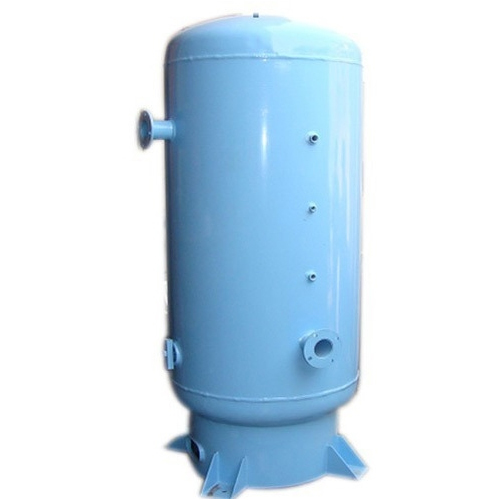
An Air Receiver Tank is a tank that stores the compressed air once it is out of the compressor. It helps in keeping a reserve of the compressed air for future use without operating or using the compressor again. The offered tank is an important part of the compressed air system. It helps in optimizing and improving the performance of the plant. The offered Air Receiver Tank is very useful and highly efficient. It can be installed in the system easily.
Technical Specification
| Shape | Vertical |
| Usage/Application | Industrial |
| Material | Mild Steel |
| Brand | Mechno Tech |
| Volume/Capacity | 20 - 280 L |
| Frequency | 50 - 60 Hz |
Reliable Compressed Air StorageDesigned for both industrial and commercial applications, this air receiver tank provides stable storage for compressed air generated by compressors. Its robust construction and powder-coated finish protect against corrosion, ensuring long-term operational efficiency and safety for pneumatic systems.
Built to International StandardsManufactured in strict adherence to ASME Sec VIII Div 1 and IS 2825 standards, this tank guarantees optimal performance and safety. Welded construction and elliptical dished ends add strength, while rigorous pressure testing up to 18 Bar confirms its reliability under demanding conditions.
Customizable to Meet Your NeedsWith customizable working pressures and production capacities determined by tank size, this floor-mounted air receiver tank offers versatile solutions. Connection ports for all essential functions support integration into various compressed air systems for enhanced flexibility and usability.
FAQs of Air Receiver Tank:
Q: How does the air receiver tank enhance the efficiency of compressed air systems?
A: The air receiver tank stores compressed air, minimizing fluctuations in pressure, reducing compressor startup cycles, and providing a reserve during peak demands. This results in more efficient system operation and energy savings.
Q: What process is used to ensure corrosion resistance in the tank?
A: Internal and external powder coating is applied to the mild steel construction, forming a protective layer against rust and corrosion, which extends the service life and reliability of the tank.
Q: Where is the air receiver tank typically installed?
A: It is floor-mounted on four legs and positioned near compressors within industrial or commercial facilities, enabling easy integration with pneumatic systems due to its various connection ports.
Q: What is the benefit of the elliptical dished end design?
A: The elliptical dished end improves the tanks structural strength and pressure resistance, reducing the risk of stress points and potential failures under high pressure.
Q: When should the air receiver tank undergo pressure testing?
A: Pressure testing should be performed after installation and during routine maintenance to ensure the tank maintains integrity and can safely operate up to the specified 18 Bar testing pressure.
Q: How is the production capacity of the air receiver tank determined?
A: Production capacity varies based on the tanks size and intended working pressure, allowing manufacturers to offer tailored solutions suitable for different operational requirements.
Q: What are the primary usage applications for this tank?
A: It is primarily used for storing compressed air in industrial and commercial environments as part of compressor systems and pneumatic tools or processes.


 Send Inquiry



 Send Inquiry

