Shell and Tube Type Heat Exchanger About
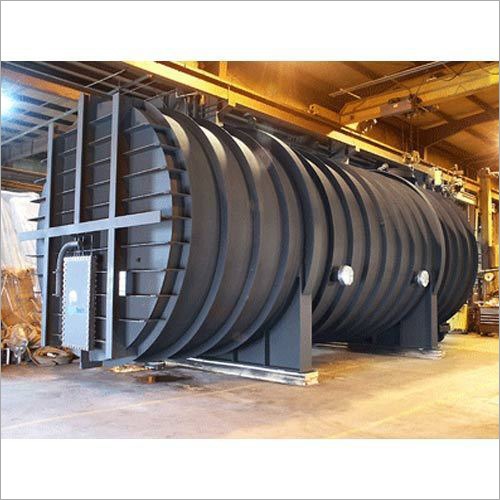
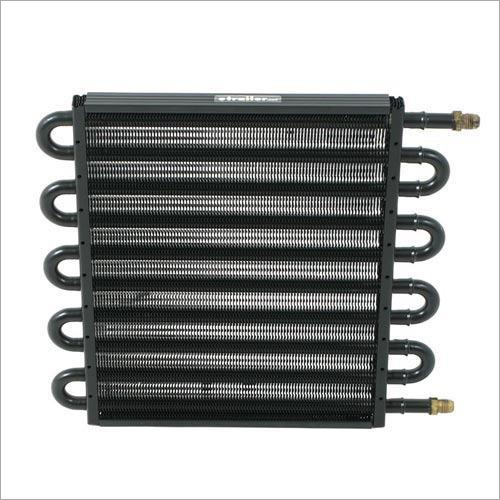
We are counted among the trusted manufacturers of Shell and Tube Type Heat Exchanger in the market. It is used in various industrial process applications because it can perform tasks such as removal of process heat and feed water preheating. Shell and Tube Type Heat Exchanger is also suitable for cooling of hydraulic and lube oil, turbine, compressor, and engine.
Product details
| Frequency | 50 - 60 Hz |
| Usage/Application | Industrial |
| Material | Mild Steel |
| Voltage | 220-440 V |
| Color | Black |
| Phase | Three Phase |
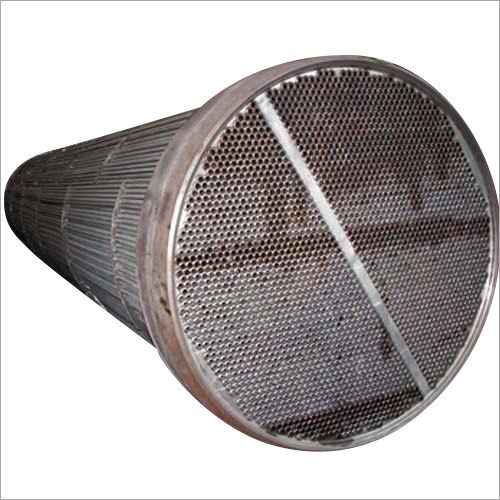
Every heat exchanger is tailored to suit a range of process requirements. Customers can specify tube and shell materialssuch as seamless stainless steel, copper, or mild steelto ensure compatibility with diverse fluids and environments. Tube length, diameter, and finishing options (anti-corrosive paint or mirror polish) allow for further customization to maximize durability and performance.
Engineered for High-Performance Heat TransferWith a heat transfer area up to 20 m, these shell and tube exchangers provide efficient energy exchange for processes requiring flow rates between 50 and 200 m/hr. Detachable designs support simplified cleaning and quick tube replacement, reducing operating costs and downtime in fast-paced industrial settings.
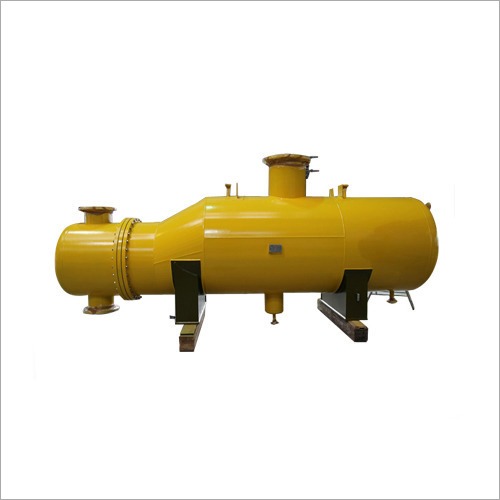
Easy Installation and MaintenanceThe exchangers are floor or skid-mounted, with end connections available in flanged or threaded formats to match site requirements. Insulation options and robust support structures facilitate safe, adaptable installation. Hydrostatic leak testing, adherence to ASME/TEMA/IS standards, and optional insulation ensure safe, trouble-free operation throughout the product lifecycle.
FAQs of Shell and Tube Type Heat Exchanger:
Q: How is the Shell and Tube Type Heat Exchanger installed and supported?
A: The unit is typically floor-mounted on a skid or saddle support for stability and safety. End connections can be provided as flanged or threaded, based on the clients requirements, to ensure compatibility with existing piping at your site.
Q: What materials are used in the construction of the tubes and shell?
A: Depending on process needs, tubes are available in seamless stainless steel, copper, or mild steel, while the shell can be fabricated from either mild or stainless steel. This allows for customization based on chemical compatibility and environmental conditions.
Q: When should I use a Shell and Tube Heat Exchanger in my process?
A: These exchangers are ideal in applications requiring reliable temperature control for liquids, such as in chemical plants, pharmaceutical manufacturing, dairy, HVAC, food processing, and power generation where high pressure and temperature resistance are needed.
Q: Where is the heat exchanger manufactured and supplied from?
A: Our Shell and Tube Type Heat Exchangers are manufactured and exported from India, ensuring high-quality standards and timely deliveries for domestic and international clients.
Q: What is the process for maintenance and cleaning?
A: The exchangers detachable design allows for quick access, making cleaning and tube replacement straightforward. Regular maintenance is simplified by easy disassembly, ensuring long-term efficiency and performance.
Q: How does the leak testing process ensure operational safety?
A: Each exchanger undergoes a hydrostatic pressure test at 1.5 times the working pressure to verify structural integrity, guaranteeing safe operation under demanding conditions.
Q: What are the main benefits of using this heat exchanger in industrial settings?
A: Benefits include customizable materials, robust construction, high heat transfer efficiency, easy maintenance, and compliance with international standardsresulting in reduced downtime, operational flexibility, and long service life.


 Send Inquiry



 Send Inquiry

